
Gagarina prospekt, d. 214, Nizhny Novgorod
Tel. +7 831
466-86-23
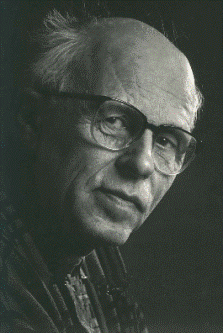
The House Museum of Andrei Dmitrievich Sakharov, often referred
to as the Memorial Apartment or Museum-Apartment of A.D. Sakharov,
is a poignant historical site in Nizhny Novgorod, Russia. It
commemorates the life and legacy of Andrei Sakharov (1921–1989), a
renowned Soviet physicist, Nobel Peace Prize laureate (1975), and
prominent human rights activist. Sakharov is widely known as the
"father of the Soviet hydrogen bomb" for his pivotal role in
developing thermonuclear weapons during the Cold War era. However,
he later became a fierce critic of the Soviet regime, advocating for
nuclear disarmament, peaceful coexistence, and human rights, which
led to his persecution. The museum is housed in the very apartment
where Sakharov was forcibly exiled from 1980 to 1986, providing an
intimate glimpse into his personal struggles during a dark chapter
of Soviet history.
Sakharov's exile stemmed from his outspoken
protest against the Soviet invasion of Afghanistan in 1979. As
punishment, he was stripped of his awards and banished to Gorky (the
Soviet-era name for Nizhny Novgorod), where he lived under strict
surveillance and isolation, cut off from the outside world. His
wife, Elena Bonner, joined him, and the couple endured harsh
conditions, including KGB monitoring and limited communication. This
period marked a turning point in Sakharov's life, as he continued
his dissident writings in secret despite the restrictions. He was
released in 1986 under Mikhail Gorbachev's perestroika reforms,
allowing him to return to Moscow. The museum, established in 1991
shortly after the fall of the Soviet Union, preserves this site as a
testament to Sakharov's resilience and his contributions to science,
peace, and civil liberties. It serves not only as a biographical
exhibit but also as a broader reflection on totalitarianism, human
rights, and the role of intellectuals in society.
The apartment at Prospect Gagarina 214, Apartment 3, was Sakharov's
enforced residence for seven years, symbolizing the Soviet state's
attempt to silence one of its most brilliant minds. During his exile,
the building—a nondescript, multi-story residential block in a southern
district of the city—was under constant watch, with Sakharov prohibited
from leaving the city or contacting colleagues abroad. The site was
chosen deliberately for its remoteness, far from Moscow's intellectual
circles, to isolate him effectively.
After Sakharov's death in 1989
and the dissolution of the USSR, efforts to memorialize his legacy
gained momentum. The museum opened its doors in 1991, transforming the
first-floor apartment into a public space dedicated to his memory. It
was initially managed by local authorities and Sakharov supporters, and
over the years, it has evolved into a cultural institution that
occasionally hosts thematic exhibitions on related topics like dissident
movements or nuclear ethics. The Sakharov Center in Moscow (now closed
due to political pressures) and affiliated sites like sakharov.space
provide broader context, emphasizing Sakharov's multifaceted identity as
a scientist, humanist, and advocate for global peace. As of 2025, the
museum remains a key attraction for those interested in Soviet history,
though it operates on a modest scale and faces occasional closures.
The museum is situated in an ordinary Soviet-era apartment building,
blending seamlessly into the residential neighborhood, which adds to its
authenticity and understated atmosphere. There are no prominent signs
marking the entrance, so visitors must rely on the exact address to find
it—look for the door to Apartment 3 on the ground floor. The building
itself is a typical panel-block structure from the 1970s, located about
10 kilometers south of Nizhny Novgorod's historic center, in a quiet
area near Gagarin Avenue.
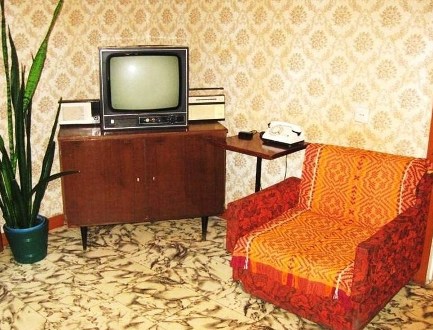
Inside, the museum spans two adjacent
apartments, creating a dual experience. One section meticulously
recreates the living quarters as they appeared during Sakharov's exile,
offering a time-capsule view of a modest Soviet provincial home. The
furnishings are simple and period-appropriate: think basic wooden
furniture, a small kitchen, bedroom, and living room that reflect the
austerity of the era. This reconstruction highlights the everyday
hardships Sakharov faced, from limited space to the psychological toll
of confinement.
The second apartment houses the main exposition, a
more curated space filled with informational displays. Here, the focus
shifts to educational content, making the museum feel like a blend of
personal memorial and historical archive.
The museum's exhibits provide a comprehensive overview of Sakharov's
life, divided into chronological and thematic sections. Key highlights
include:
Early Life and Scientific Career: Panels and artifacts
detail Sakharov's upbringing in a cultured Moscow family, his education
in physics, and his groundbreaking work on cosmology, elementary
particles, and nuclear fusion. Photographs and documents showcase his
role in the Soviet atomic project, including declassified memos on the
hydrogen bomb development.
Transition to Activism: A significant
portion explores his shift from state scientist to dissident, including
his essays on intellectual freedom and opposition to nuclear testing.
Exhibits feature replicas of his Nobel Prize medal and writings smuggled
out during exile.
Exile Period in Gorky: This is the museum's core,
with personal items like Sakharov's desk, books, and household objects
that illustrate his daily life under house arrest. Audio recordings,
letters, and videos (if available) recount hunger strikes, KGB
harassment, and his continued advocacy.
Legacy and Human Rights:
Later sections cover his post-exile activities, influence on
perestroika, and enduring impact on global human rights. Temporary
exhibitions might address contemporary issues like freedom of speech or
nuclear proliferation.
The collection primarily consists of
photographs, documents, and memorabilia rather than high-tech
interactive elements, emphasizing authenticity over spectacle. It's
particularly appealing to history buffs, though it may feel niche for
casual visitors.
As of 2025, the museum operates from 10:00 AM to 5:00 PM, closed on
Fridays. However, it's advisable to call ahead at +7 (831) 462-61-25, as
it has been known to close unexpectedly, even during posted hours.
Entrance fees are affordable: 70 rubles for adults, 50 rubles for
students, and 30 rubles for children. Guided tours for groups of up to
15 people cost an additional 200 rubles and can provide deeper insights,
often in Russian (English materials may be limited).
Reaching the
museum requires some effort, as it's 10–12 km from the city center.
Public transport is convenient: Take bus No. 1 from Ploshchad Minina i
Pozharskogo or Ploshchad Gorkogo, or other routes like buses 2, 12, 43,
53, 62; trolleybuses 13, 16, 31; or minibuses T3, T17, T19, etc., and
alight at the "Muzey Akademika Sakharova" stop. A taxi or ride-sharing
service from the center takes about 30 minutes and costs around 300–500
rubles. Parking is available nearby for drivers.
Visitors often note
the museum's emotional impact, praising its raw authenticity but
suggesting it's best for those with an interest in Soviet dissidents or
physics history. It's included in guides like Lonely Planet, attracting
international tourists, though crowds are rare. Allow 1–2 hours for a
visit, and consider combining it with other Nizhny Novgorod sites like
the Kremlin for a full day of exploration.